Software Product Engineering: Everything You Need to Know
Learn how software product engineering helps businesses design, build, test, and improve software products.

Key Takeaways
Software product engineering manages the complete journey of a software product from planning and development to testing and ongoing improvements.
A structured product engineering approach helps teams reduce development challenges and build more reliable software.
Effective product design and early validation help reduce rework and create a clearer path for development.
Continuous testing and quality engineering ensure software performs reliably and meets user expectations.
Regular updates, maintenance, and user feedback help software products remain useful as business and customer needs change.
Introduction
Building a software product does not end when the first version is released. It requires regular updates, bug fixes, performance improvements, and new features as user needs and business requirements change. Software product engineering covers this complete process, from planning and design to development, testing, deployment, and ongoing maintenance.
The global Product Engineering Services Market is expected to reach $2,041.4 billion by 2028, growing at a CAGR of 8.5%. This increase indicates how businesses are progressively investing in structured approaches to develop, improve, and maintain software products.
This blog explores the fundamentals of software product engineering, its key benefits, the seven stages of the product engineering lifecycle, and strategies for building an effective product engineering approach in 2026. It also covers the role of product design engineering software, real-world applications across industries, product testing methods, and the key challenges along with effective practices involved in delivering successful software products.
What Is Software Product Engineering?
Software Product Engineering (SPE) covers the complete journey of a software product, starting from the first idea and planning stage to development, testing, launch, and the improvements that follow. A software product does not really stop evolving after release. It continues to change through bug fixes, new features, performance improvements, and updates driven by user feedback and business needs.
This is what sets software product engineering apart from traditional software development. Traditional development is usually focused on delivering a specific application or feature, while SPE looks at how the product will perform and evolve over time.
As software takes on a bigger role in business operations, the way it is managed has also become more complex. Requirements keep changing, features evolve, and user expectations shift quickly. Without a structured approach, development can easily become inconsistent. SPE helps bring more stability by improving how teams plan, build, test, and refine products over time.
To handle this lifecycle in a practical way, teams usually follow a few common development models.
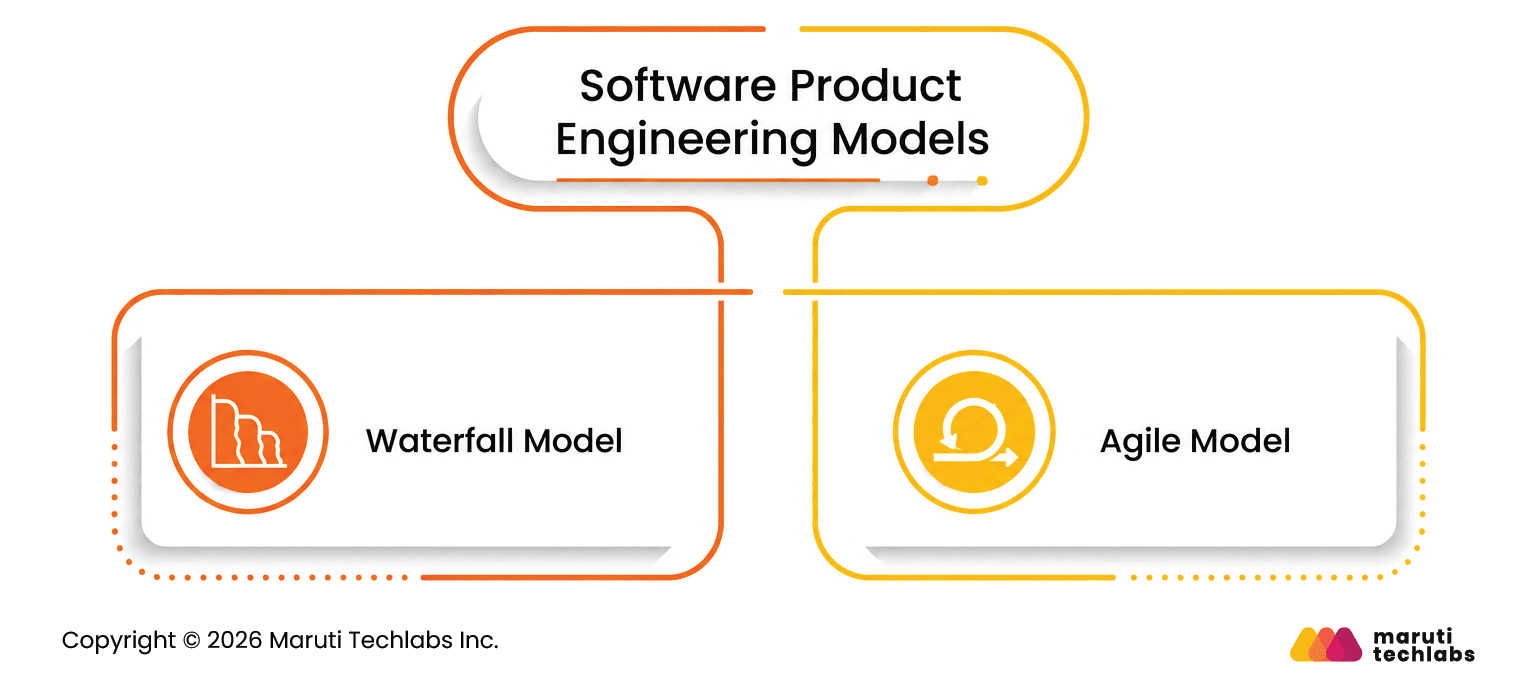
Waterfall Model: The waterfall model follows a step-by-step approach where one stage is completed before the next begins. It is usually used for projects where the goals, scope, and requirements are clear from the start and are unlikely to change much later.
Agile Model: The agile model breaks development into smaller iterations, permitting teams to build, test, gather feedback, and make improvements along the way. It is better suited for projects where requirements may evolve over time.
Benefits of Software Product Engineering
Software product engineering provides multiple advantages throughout the development process. It helps teams build better software, reduce unnecessary development effort, and deliver a consistent experience across systems. It also makes products easier to maintain and improve over time.
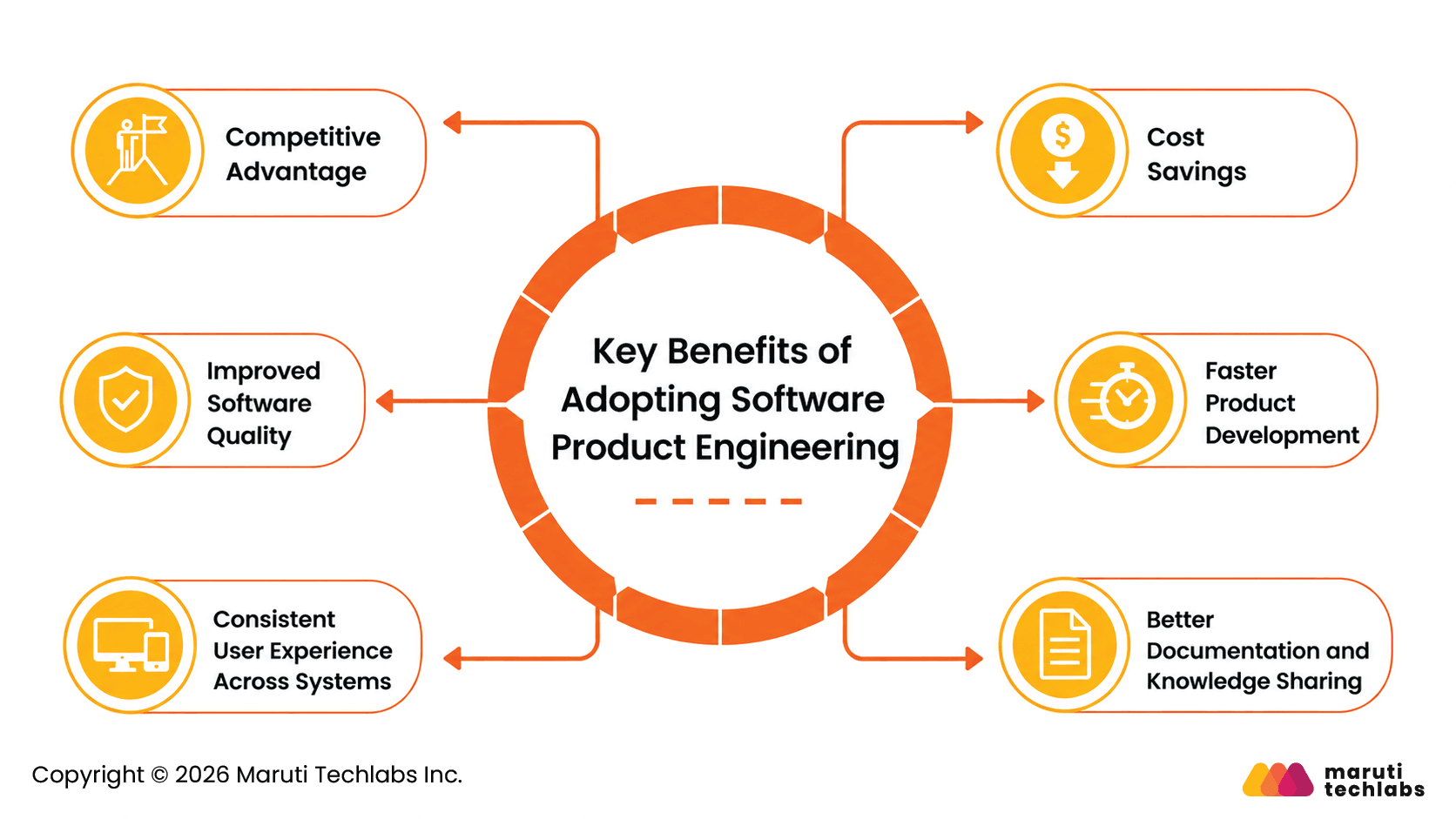
1. Competitive Advantage
Software product engineering helps businesses build products with better functionality, usability, and overall quality. Well-designed software can help organizations stand out from competitors and better address customer requirements.
2. Cost Savings
A structured development process helps teams catch issues before they become expensive to fix. This reduces rework, controls software development costs, and makes ongoing maintenance easier.
3. Improved Software Quality
Software product engineering includes practices such as quality assurance, testing, validation, and code reviews to ensure the product meets technical and business requirements.
4. Faster Product Development
A well-defined development roadmap, standardized processes, and better team cooperation help accelerate software development and reduce time-to-market.
5. Consistent User Experience Across Systems
SPE focuses on usability and design consistency, helping businesses deliver an effortless experience across web, mobile, and other digital channels.
6. Better Documentation and Knowledge Sharing
Full documentation, including requirement specifications, technical designs, and test plans, helps development teams keep clear project visibility and keeps stakeholders aligned.
7 Stages of the Software Product Engineering Lifecycle
Software product engineering follows seven stages that guide the entire journey of a product, from initial planning to development, testing, release, and continuous improvement. Each stage contributes to building a reliable and well-structured software product.
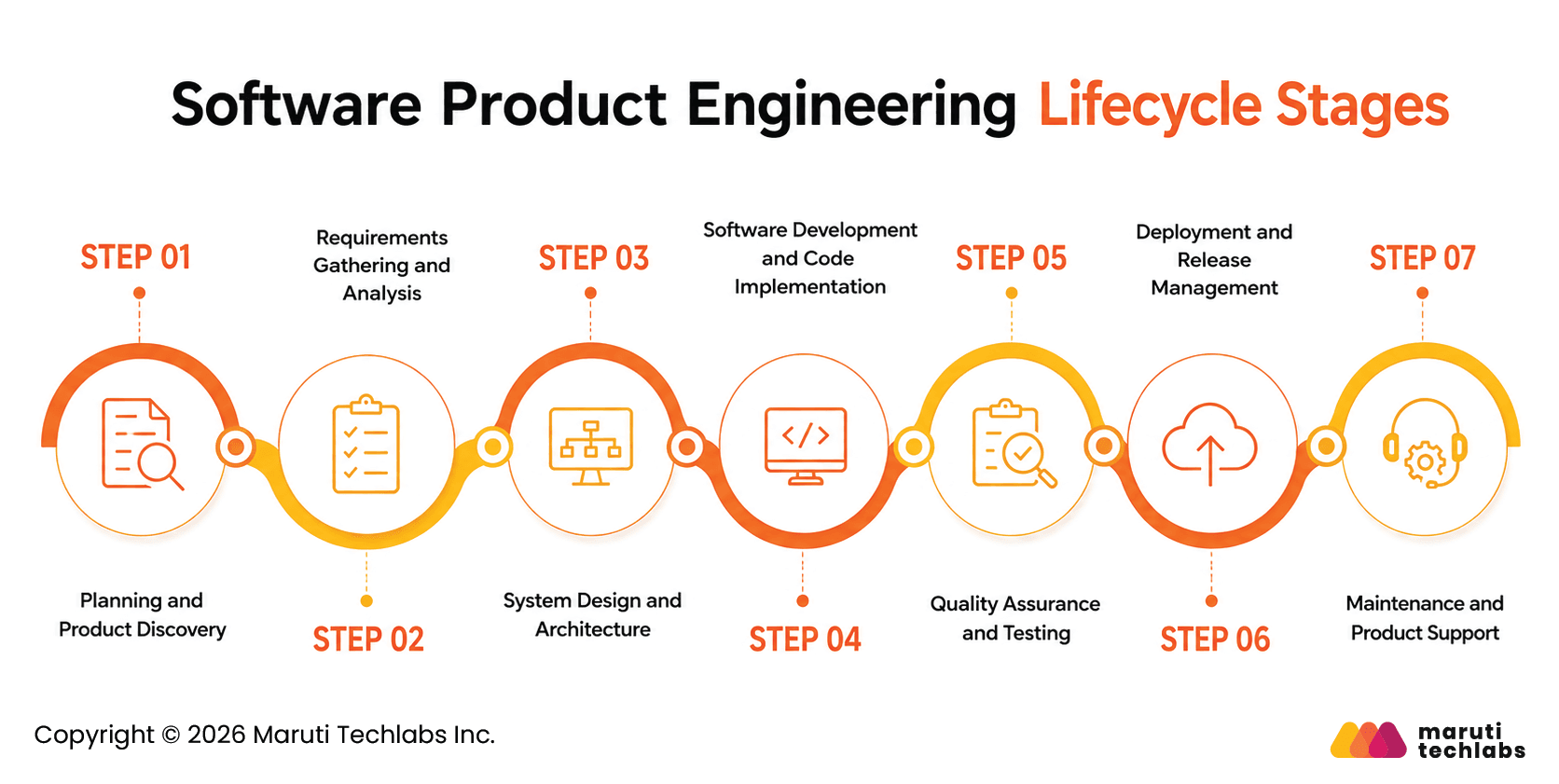
1. Planning and Product Discovery
This stage is where teams define the product vision, understand user problems, evaluate technical feasibility, and create a clear roadmap for the development process.
2. Requirements Gathering and Analysis
In this stage, business analysts and product teams gather functional and non-functional requirements. These requirements are documented in a Software Requirement Specification (SRS) to guide the development process.
3. System Design and Architecture
Based on the requirements, architects and designers plan how the software will be structured. They define the overall architecture through High-Level Design (HLD) and detail individual modules, components, and their interactions through Low-Level Design (LLD).
4. Software Development and Code Implementation
Developers build the application by writing code, conducting code reviews, and managing source code through version control systems.
5. Quality Assurance and Testing
QA teams test the software to identify defects and verify its functionality, security, performance, and overall reliability before release.
6. Deployment and Release Management
After successful testing, the software is moved to the production environment. Many teams use CI/CD pipelines to automate deployments and make software releases more consistent.
7. Maintenance and Product Support
After a product goes live, teams continue improving it based on real-world usage. This includes resolving issues, refining existing features, and making changes needed to support business and user requirements.
How to Build an Effective Software Product Engineering Strategy in 2026
An effective software product engineering strategy in 2026 requires balancing innovation with maintainability, performance, and long-term product scalability. Modern engineering teams are focusing on the following areas to build reliable, adaptable, and efficient software products.